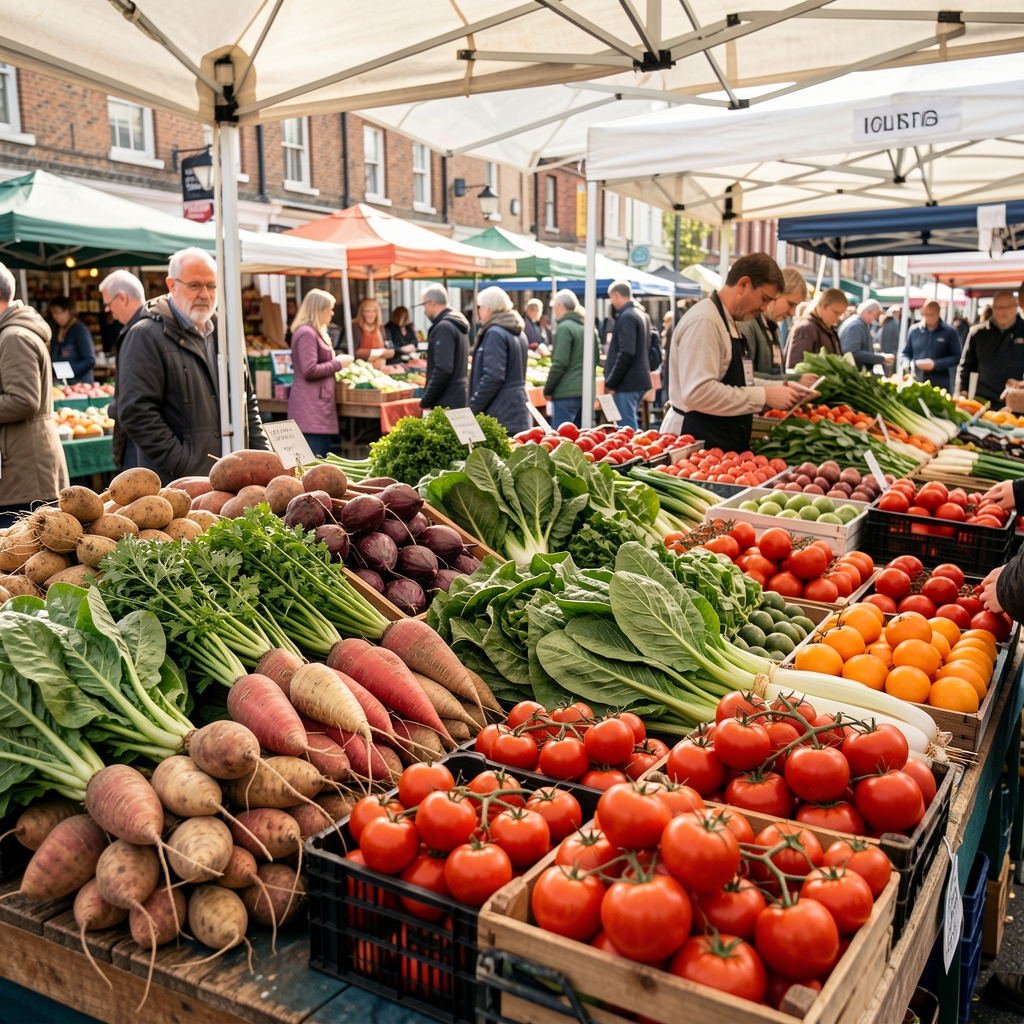
The British food calendar has a distinct rhythm that is easy to ignore in the era of year-round supermarket availability but is, when followed, one of the more practical frameworks for building nutritional variety into an everyday diet. Seasonality is not a nostalgic preference. It is an observation about when particular vegetables and fruits are at their most nutritionally dense, their most affordable, and — in most accounts — their most flavourful.
What Seasonality Means in Practice
Seasonal eating, in a practical sense, means building grocery choices around what is being harvested in the current or recent period rather than around an invariant shopping list. In the United Kingdom, this involves recognising a rough seasonal calendar: the abundance of root vegetables, brassicas, and stored squash in autumn and winter; the arrival of asparagus, broad beans, and spring greens in April and May; the summer flush of courgettes, tomatoes, cucumbers, and soft fruits; the transition back through apple and pear season in early autumn.
The nutritional case for seasonal eating rests on two linked observations. First, vegetables and fruits begin to lose certain vitamins — particularly ascorbic acid and folate — after harvest. Produce that has been stored for extended periods or transported across long distances has had more time for this degradation to occur. Produce that is in-season and locally sourced typically has a shorter post-harvest window. Second, seasonality encourages dietary rotation: the household that eats what is available and affordable at different points in the year consumes a wider variety of vegetables and fruits across the year than one working from a fixed list.
Dietary variety is itself a nutritional value. Different vegetables supply different micronutrients and different types of dietary fibre. A winter diet built around root vegetables and brassicas provides different compounds from a summer diet built around cucumbers and courgettes. The rotation across the year, if the household follows roughly seasonal choices, produces a broader nutritional profile than a narrow year-round repertoire.
"The seasonal calendar is not a constraint on variety — it is a mechanism for producing it. The household that follows the calendar eats differently in January than in July, and differently again in October."
Fibre, Gut Health, and the Vegetable Roster
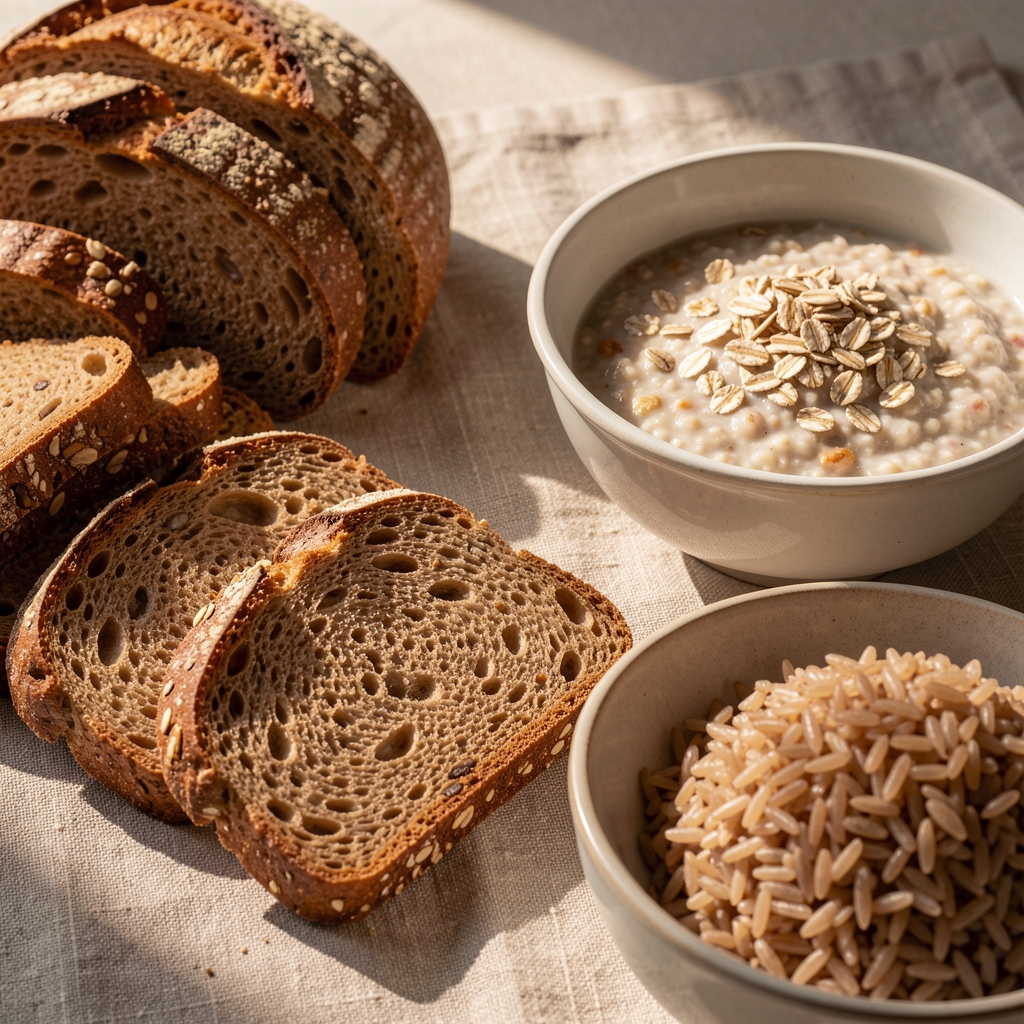
The relationship between dietary fibre and gut health is one of the more robust areas in published nutrition research. Fibre — from vegetables, fruits, legumes, and whole grains — provides substrate for the microbial population of the gut, supporting the production of short-chain fatty acids that are associated with several markers of digestive function and general wellbeing. The specific types of fibre matter: different bacterial populations metabolise different fibre substrates, which is one reason dietary variety is associated with a more diverse gut microbiome in population studies.
Seasonal eating supports fibre variety in a direct way. The fermentable fibres in leeks and onions are different from those in courgettes; the pectin in apples and pears behaves differently from the insoluble fibre in kale. A diet that rotates through seasonal produce is, in effect, a diet that rotates through different fibre types, which aligns with the general recommendation for dietary diversity rather than supplementation or specific fibre products.
The practical implication is not complex: a weekly menu that includes five or six different vegetables — chosen for what is currently in season and readily available — is likely to supply a wider range of fibre types than one built around two or three year-round staples. This is not a prescriptive formula. It is an observation that variety in the vegetable roster, supported by the natural rotation of seasonal availability, tends to be nutritionally beneficial.
The Seasonal Calendar as a Meal Planning Tool
The seasonal produce calendar functions naturally as a meal planning aid. When a household knows what is currently in season — and therefore likely to be at its most affordable and accessible — it has a ready-made starting point for the week's vegetable and fruit choices. The plan does not need to begin with a recipe search; it can begin with the question of what is available and build outward from there.
This approach reverses the typical consumer experience, which tends to start with a desired dish and then assemble ingredients regardless of season. Starting with the ingredient and then deciding how to use it is a different cognitive relationship with food — one that favours familiarity with a range of preparations rather than adherence to a fixed repertoire of specific recipes.
A useful exercise is to identify two or three seasonal vegetables available in the current week and plan two or three different preparations for each across the week's meals: roasted, raw in a salad, blended into a soup, or incorporated into a grain bowl. This generates variety in preparation method and texture from a small number of seasonal staples, reducing the planning burden while maintaining the nutritional and practical benefits of seasonal choice.
- Seasonal produce typically has a shorter post-harvest window, which limits nutrient degradation compared to long-stored or long-transported alternatives.
- Following a seasonal calendar naturally produces dietary variety across the year, supporting a broader intake of micronutrients and fibre types.
- Seasonal vegetables at peak abundance are generally more affordable, making the approach compatible with household budget management.
- Starting the weekly plan with seasonal availability rather than desired dishes is a practical reversal that tends to produce more nutritionally varied menus.
What the UK Seasonal Calendar Looks Like
For reference, the United Kingdom's seasonal produce calendar broadly follows these patterns, with variation by year and growing conditions:
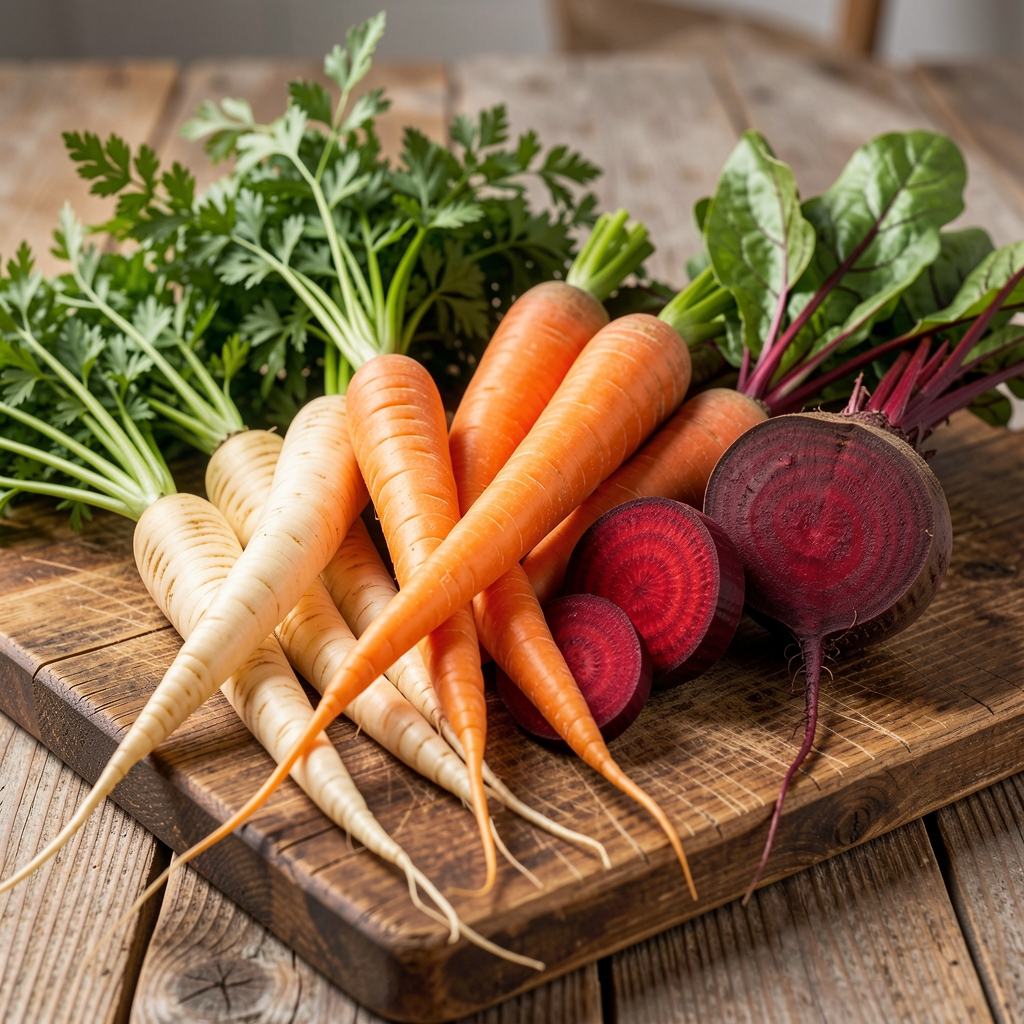
Winter (December–February): Celeriac, parsnips, turnips, swede, kale, Brussels sprouts, leeks, stored squash, savoy cabbage, beetroot, purple sprouting broccoli begins in late February. Stored apples and pears. The fibre-rich roots dominate; preparation is typically roasting, slow-cooking, or souping.
Spring (March–May): Purple sprouting broccoli, asparagus from late April, spring cabbage, new potatoes, radishes, broad beans, peas, watercress, wild garlic. A sharp increase in tender green vegetables with different fibre and micronutrient profiles from the root-heavy winter.
Summer (June–August): Courgettes, cucumbers, tomatoes, runner beans, French beans, aubergine, sweetcorn, salad leaves, herbs, strawberries, raspberries, gooseberries, blackcurrants. The broadest and most colourful range; preparation is often lighter — raw salads, quick stir-fries, grilling.
Autumn (September–November): Squash and pumpkin, apples and pears at peak, plums, elderberries, cobnuts, artichokes, fennel, celeriac, transition back to root vegetables. The apple-and-pear period provides soluble fibre from pectin that is notably different from the fibre sources of other seasons.
Practical Adjustments for Seasonal Eating
Fully seasonal eating is not always possible or practical, particularly for households in urban settings where market access is limited or where time constraints make frequent trips to specialist suppliers impractical. The supermarket remains the primary source for most UK households, and supermarket availability of seasonal produce varies by retailer and region.
A reasonable adjustment is to apply seasonality selectively rather than absolutely: to choose the in-season vegetable over the out-of-season one where both are available, to incorporate one or two obviously seasonal items into the weekly shop, and to reduce — rather than eliminate — year-round imports of produce that has an obvious seasonal equivalent. This partial approach still produces most of the variety and cost benefits of more rigorous seasonal eating.
Frozen vegetables are a practical complement to seasonal eating. Vegetables frozen immediately after harvest retain most of their nutritional content, and frozen peas, broad beans, and sweetcorn can provide summer-season fibre and micronutrient profiles through the winter months. They are typically more affordable than out-of-season fresh equivalents and involve no preparation beyond defrosting.
Articles published on Elbora Notebook are editorial in nature and reflect the writers' observations on everyday wellness practices. The content is not intended as professional advice, nor as guidance for the management of any specific condition. Readers with specific concerns about their daily routines are encouraged to speak with a qualified wellness professional.